

Version 3.10.0 - Sep 25, 2026
Features- Direct editing for prototypes. Select an element and change its text, colour, font, size, spacing, borders, and radius directly on the canvas.
- Preview changes live and apply several edits together.
- Use values from your attached Design System instead of creating one-off styles.
- Prompt the selected element directly when that is faster.
- Default Design Systems for organisations. Admins can set a Design System that new projects attach automatically.
- Figr recommends the most-used system when no default is set.
- The picker now has search, recommendations, clearer badges, and easier access to Design System settings.
- Design System pages now show assets and component usage guidance alongside the system.
- Smoother large prototype boards. Screens outside the viewport use lightweight previews, so projects with many screens load, pan, and zoom more reliably.
- Better fullscreen workflows. Prototypes keep their current route, scroll position, and form state when opened fullscreen. Docs and flow diagrams now have fuller editing views too.
- More reliable Figma import and export. Imports can skip broken text styles instead of failing completely, while larger and image-heavy exports handle slow connections and retries better.
- Better seat and credit controls. Enterprise teams can request seats or credit top-ups inside Figr, and admins get clearer warnings when sharing with members who cannot open a project.
- Fixed Design System fonts changing Figr’s own interface typography.
- Fixed chat drafts disappearing when moving around the canvas.
- Fixed
@mentions leaving stray text after removal. - Fixed some MCP connections being limited to read-only access unexpectedly.
- Fixed several file-drop, viewport, and prototype interaction issues.
Version 3.9.0 - Sep 8, 2026
Features- GitHub connector. Connect repositories to projects so Figr can use your existing codebase as context.
- Choose exactly which repositories Figr can access.
- MCP write access (available to select organizations). Tools like Claude Code and Cursor can now create and edit content in Figr.
- Changes appear in project chat and version history.
- Quote and reference on canvas. Select AI responses or canvas elements and reference them directly in your next message.
- Angular prototypes. Build prototypes with Angular and Angular Material, with the same Design System support as React.
- Automatic brand matching. Figr can pull colors, fonts, and logos from your website when no Design System is attached.
- Self-serve workspace deletion. Admins can delete their workspace and subscription from Settings.
- Smarter Design System feedback. Match checks now use a detailed scale instead of a simple yes/no and no longer appear on wireframes.
- More reliable prototype and Design System builds. Stale previews are now cleared automatically.
- Smoother canvas performance. Large projects now load, pan, and zoom more smoothly.
- More reliable long conversations. Improved summarization and higher task limits reduce failures during complex sessions.
- Shareable query links. Project links can now open a conversation at a specific query.
- Consolidated Help menu. Documentation, shortcuts, support, and feedback now live in one menu.
- Enterprise trial visibility. A banner now shows when an Enterprise trial is ending or has ended.
- Fixed blank published prototypes on nested routes.
- Fixed mobile publishing, preview, and scrollbar issues.
- Fixed Figma export tagging the wrong prototype version.
- Fixed a CSS-in-JS issue in Figma export.
- Fixed older prototype versions not opening correctly in Code view.
- Fixed new projects missing a
.gitignorefile.
Version 3.8.0 - Aug 19, 2026
Features- Wireframes on canvas. Wireframes created in chat now appear as canvas nodes alongside prototypes and other project work.
- Edit parts of a wireframe without generating the whole thing again.
- Add wireframes from older chats back onto the canvas.
- Resize, view fullscreen, copy as an image, use version history, and Select & Edit.
- Multiple chats in one project. Explore different directions without duplicating the whole project.
- Switch between separate conversations while keeping the same canvas, files, and version history.
- Fork any completed turn to try another direction without changing the original chat.
- Each chat can generate independently.
- Custom Skills. Add standing instructions for how Figr should work with your team.
- Keep a Skill always on or let Figr use it only when relevant.
- Type
/in chat to bring in a specific Skill. - Team members can view shared Skills, while owners and admins manage them.
- In-app feedback. Rate your experience directly from chat and add more context when something is not working.
- Negative feedback can include reason tags and free text.
- Responses save as you fill them in.
- A book-a-call option appears when more help is useful.
- Enterprise credit reshuffling. Admins can move unused AI credits from one team seat to another.
- Remaining credits now appear in Members & Seats.
- Credit transfers stay within the same organization.
- Enterprise shared-credit handling was also added to the project-sharing flow.
- More reliable usage tracking. Settings → Activity now uses a real-time usage ledger instead of waiting on slower project scans.
- A loading state appears while older organization history is indexed.
- More reliable Design System indexing.
- Failed indexing jobs now retry instead of getting stuck.
- Runs that index zero projects are no longer marked as complete.
- More reliable code generation. Subagents now run an automatic lint check while generating code.
- Exploration and code tasks moved to a newer model.
- Stability work reduced crashes and hangs introduced by the linting flow.
- Better Figma export debugging. Bulk Figma exports now record the same debugging information available for single-screen exports.
- Fixed a typography-panel overlap issue.
- Fixed Figma frames attached through the plugin not appearing as visible attachment chips.
- Fixed Design System publishing failures caused by hardcoded package names in prototype imports.
- Fixed Design System republishing that could overwrite hand-written agent guidance.
- Fixed vendored Design Systems, including MUI-based systems, not rendering correctly in previews.
- Fixed several crashes and hangs in the code-generation flow.
Version 3.7.0 - Aug 3, 2026
Features- Screens for prototypes. View every route and UI state on one flow board. Loading, empty, error, and success states appear as separate frames with labelled sections and transition edges.
- Export multiple screens to Figma in one run, with progress and errors shown per screen.
- Use Generate screens to let the agent propose and build missing states.
- Queued messages. Send follow-ups while the agent works. Figr runs them in order once the current task finishes.
- Edit, remove, or clear queued messages.
- Queues pause after errors or when credits run out, and resume when ready.
- Also works in Design System chats.
- Organize canvas. Group canvas nodes by creation date or type, including Prototypes, Documents, Flows, Images, and Stickies.
- Manually created sections stay unchanged.
- Sections now behave more like Figma frames.
- Stickies, text, and documents now resize with live previews.
- Context from past chats. New chats can pull relevant decisions from earlier chats in the same Context Pod and show where they came from.
- Screenshots and attachments help find the right past context.
- Figr stays quiet when nothing relevant exists.
- Comments on shared projects. Signed-in viewers can comment and reply through public project links without joining the workspace. Only workspace members can resolve or delete threads.
-
Workspace join requests. Users with a matching work email can find and request access to their team’s workspace.
- Admins can approve requests from email or Settings → Members.
- Workspaces can allow instant domain-based access or require approval.
-
More reliable Design Systems.
- Attached or switched Design Systems now apply to the next query.
- Removing one clears it across the project and agent context.
- Older Design Systems now open the upgrade flow instead of failing.
- Newer projects now use the same token, component, and lint checks as older projects.
-
Faster canvas opening.
- Canvas content loads before full history and project files.
- Duplicated prototypes reuse their existing previews.
-
Updated design agent. The agent now uses Claude Opus 5, with Sonnet 5 for subagents. More steps now run in parallel.
- The agent makes fewer repeated edit calls and unnecessary follow-up questions. Failed steps report clearly.
- Video summaries use a newer, faster model.
- Starter pricing. The Starter plan is back to $39 with 200 credits per month
- Clearer Figma plugin errors. The plugin now detects when Figma is in the background and asks you to bring it forward.
- Design System scans explain why capture paused.
- Chat responses stay active when Figma stops responding.
- Improved Mermaid diagram rendering, including fullscreen.
- Deleted projects now leave the sidebar immediately.
- Fixed several canvas, loading, and interaction issues.
Version 3.6.5 - Jul 17, 2026
Features- Unified @ mentions. Reference canvas nodes, sections, chats, Context Pod attachments, and product-context files from one mention system. References are resolved before execution, with relevant product context retrieved automatically.
- Context-aware canvas creation. Choose a searchable Context Pod and Design System before creating a canvas, so the agent starts with the right product knowledge and component context.
- Redesigned Context Pods & Design Systems. New card-based pages with ownership filters, file and canvas counts, usage visibility, dark-mode component previews, and inline documentation.
- Position-pinned prototype comments. Leave comments directly on published prototypes. Pins stay anchored to the same screen position while reviewers pan and zoom.
- Query-scoped file attachments. Attach files directly to a query without automatically adding them to the canvas. Files can still be added to the canvas when needed.
- More resilient sessions. Automatic socket reconnection and larger payload limits make longer generations and heavier sessions more reliable.
- Improved Claude and MCP hand-off. One-click Claude plugin installation, hand-off marks, and more reliable context transfer between Figr and MCP-compatible tools.
- Browser notifications. Opt in to receive a notification when the agent finishes generating a response.
- Annual pricing at usage limits. Annual plan options now appear directly in the usage-limit modal, making lower-cost billing options easier to access.
- Failed streams now surface errors. Interrupted or failed generations show a clear error state instead of leaving the conversation silent.
- @ mentions resolve the correct resource. References now open the actual chat, canvas node, or document instead of falling back to guessed paths or incorrect resources.
- MCP communication is more reliable. Fixed issues that could cause hand-offs or context transfer to fail intermittently.
- Smoother plugin rename and open flow. Fixed stuttering and unnecessary transitions when renaming a plugin and opening it immediately afterward.
Version 3.6.2 - Jul 3, 2026
Features- New Starter plan. A lower entry point to go paid — the Starter tier now starts at $19/month, so you can unlock the paid experience without a bigger upfront commitment.
- Redesigned pricing page. A cleaner, clearer pricing page that lays out what each plan includes and makes it easier to pick the right one, with checkout handled through Stripe.
- Better design-system adherence. When a design system is attached to your project, new designs now stick to it far more reliably — reaching for your published components and design tokens instead of hand-rolling one-off styles. The building agent resolves your component catalog more accurately, so what it generates looks like it belongs to your system.
- Steadier long sessions. Extended, multi-step generations hold up better across long conversations — smarter handling of history and step limits means the agent winds down gracefully and finishes the job instead of stalling out on a large task.
- Fixed errors that could interrupt submitting a query.
- Fixed preview rendering and loading states so results appear reliably.
- Fixed remote export so exports complete as expected.
June 2026
Version 3.6.0 - Jun 16, 2026
Features- Choose where your data lives. Figr now supports EU data residency, so teams with regional requirements can keep their data in-region. Pick your region right where you work - no separate setup.
- Region-aware Figma plugin. New and signed-out users get a US/EU selector; your choice is remembered after you sign in and reused on every run.
- Reference another chat with
@. Type@in the canvas composer to pull in another chat by name — it drops in as a tidy, removable chip, so the agent has that project’s context without you copy-pasting anything. Multi-word names and search-as-you-type make the right chat easy to find. - See what the agent will act on before you send. A new card above the chat composer shows the canvas edits you’ve made since your last message — the exact changes the agent will pick up on its next turn. Sanity-check your context first, then send with confidence.
- Version-aware artifact cards. Prototype, doc, and diagram cards now show which version they are and open that exact version instead of always jumping to the latest — so revisiting an earlier result lands you where you expect.
- Cleaned up prototype node behavior on the canvas, including the delete-prototype confirmation and chip UI.
- Fixed connector rendering between canvas nodes.
- Improved handling of Markdown and
.mmddiagram files.
Version 3.5.5 - Jun 8, 2026
Features- New connector integrations: Slack, Linear, and Mobbin. Connect the tools your team already lives in so Figr’s agent designs with your real context. Pull conversations and decisions from Slack, tickets and specs from Linear, and reference real shipped-product screens from Mobbin — all feeding the agent’s understanding of what you’re building.
- Connect with an API key. Providers that don’t support one-click sign-in can now be linked with a personal access token or API key, so more tools are reachable.
- Add and use in one place. Connectors you enable in settings now show up in the canvas assets menu right away, with a clear entry point to add your first one.
- Auto app updates. Figr now updates itself in the background — you get the latest version without manually refreshing, and an interrupted session can pick up where it left off instead of starting over.
- Duplicate Nodes. You can now duplicate and copy nodes across canvases. Just copy and paste into another canvas. Much easier to
- Security hardening. A round of hardening across sign-in and sharing — stricter session handling, secure response headers, tightened redirects, and refreshed rate limits — to keep your account and shared projects safer.
- Smoother Figma export. Saving a design to Figma is more reliable, and the export now carries design tokens and richer styling through to the plugin for a cleaner result.
- Faster, more reliable copying. Copying and duplicating canvas nodes — including images and other media — is quicker, works consistently across browsers, and no longer races against the clipboard.
- Fixed a duplicate/remix issue where copying a project could pull in content from the wrong project.
- Fixed SVGs not rendering in prototypes and several Figma import glitches, including frame fills, ring shadows, and spacing gaps.
- Fixed duplicated projects occasionally saving under the wrong ID.
- The browser tab title now updates as you move between projects.
May 2026
Version 3.5.0 - May 28, 2026
Major Release
The New Canvas. Your whole project is now one infinite, full-screen canvas — your first prompt becomes a live project with no reload.
- The New Canvas. Your project is now one infinite, full-screen canvas instead of separate pages. Your first prompt turns into a live project with no reload, and your drawings, stickies, and dropped media are versioned per project — they’re no longer wiped when you retry a query.
- New node types. Drop in links (with live previews) and PDFs (first-page thumbnail, selectable text), group nodes into Sections, and add annotations — mark a region inside an image and the agent gets a crop of just that area plus your note.
- Click-to-use prototypes. Select a prototype and it’s instantly live: drag to interact, hold Space to pan, scroll to zoom, resize to fit. No separate “Interact” toggle.
- Live cursors and follow mode. See teammates’ named cursors on the canvas and click an avatar to follow their view, Figma-style.
- Edit and re-run queries in place. Return to earlier results and re-select them, with smoother gestures and deeper zoom.
- Smarter design agent, now on Opus 4.8. Sharper, more on-brief generations that follow your intent more faithfully and break far less mid-build, with the agent’s internal guidelines and tool instructions rewritten for fewer wasted steps.
- Version history that reads like a story. The Activity panel now groups edits under the prompt that made them, and deleted or retried queries no longer clutter the timeline. Docs, Mermaid diagrams, and freshly-pasted content now version correctly.
- Shared links now render read-only for logged-in outsiders, guests, and anonymous visitors — no more 403. Sign in from a shared view and you land back on the same project.
- Legacy-engine projects publish, render, and show history without errors.
- The app detects a new version, prompts a refresh, and stops serving stale chunks — no blank screens after a deploy. Plus fixes for shared image thumbnails, project renaming, and new-user sign-up.
Version 3.4.0 - May 14, 2026
Features- Version history for every artifact. Each prototype, doc, and flow now keeps its own timeline of versions. Open the version dropdown in the fullscreen header to look back at any earlier state of a single artifact, without touching the rest of your canvas.
- Version-pinned publishing. When you publish, the shared link is now frozen to the exact version you published — later edits no longer leak into a live link. The publish panel shows which version is public and flags when a newer one is available, with a one-click “Update to latest.”
- Reliable builds behind every share. Published prototypes are compiled into their own standalone build per version, so a shared link always renders the frozen snapshot. If a build fails, the publish panel surfaces it and lets you retry, and unpublishing fully tears the live link down.
- Smoother upgrades and plan changes. Upgrading now runs through a new checkout flow, and moving between plans (including converting to Stripe billing) is handled more cleanly end to end.
- Slimmer iPhone prototype frame. The device frame around mobile prototypes is tighter and truer to the real thing.
- Fixed top-ups being blocked in some billing states.
- Fixed credits being drained incorrectly from a seat.
- Fixed image and asset uploads failing in some cases.
- Fixed prototypes occasionally rendering blurry.
- Fixed connection issues with the MCP server for tools that connect without auth.
April 2026
Version 3.3.0 - Apr 22, 2026
Features- Share and remix any project. Projects can now stand on their own. Make one public and anyone can open it, then click Duplicate to spin up their own copy, no account required to view. Signed-out visitors keep their remix intent through sign-up so the project lands in their new workspace.
- Remix a single query. Instead of cloning a whole project, you can fork just one query and its result into a fresh canvas to explore a variation without touching the original.
- Design System over MCP. Connect your Figr design system to external AI tools like Claude Code and Cursor through our MCP server, so those agents can read your real components and tokens and build against them directly. Richer tool descriptions and server-level guidance mean connected agents understand what your project holds without a discovery round-trip.
- Personal workspaces. Create your own personal workspace to work solo, with smarter handling of team invites and auto-join so you land in the right place instead of a shared org by default.
- See who did what. Projects and queries now show user attribution, so on shared work you can tell at a glance who created or ran each thing.
- Figma export with auto-layout and variables. Exports to Figma now come through with proper auto-layout and mapped variables, so the result is a real editable Figma structure instead of a flat, static frame.
- Sharper design-to-code from Figma. The Figma plugin now extracts real assets — images and vectors — when you pull a frame, so generated code renders with your actual artwork instead of broken images or placeholders.
- Stronger design system agent. The design system agent gained import-tokens and query tooling and clearer craft guidance, so it pulls from your system more reliably and drifts off-brand less often.
- Self-serve migration to the new agent. Projects still on the old agent now show a banner and a one-click button to migrate to the current agent, and you can upload
.htmlfiles directly into a project. - Video frames inline in chat. Video output now renders directly inside the chat instead of forcing you elsewhere to view it.
- Duplicating and remixing projects is more reliable, including longer-running clones that previously timed out and cases outside a single organization.
- Fixed a duplicate-streaming glitch where a response could render twice.
- Fixed the share dialog and several publish-mode styling issues.
- Fixed editing document nodes on the canvas.
- Removed the paste-from-Figma path in favor of the plugin flow, cleaning up a confusing duplicate way in.
Version 3.2.4 - Apr 17, 2026
Features- Project cloning. Duplicate any project, yours or a teammate’s, and start a new project from where they left off. All context, artifacts, and product knowledge carried over. No rebuilding from scratch.
- Agent 2.0 MCP Server. An advanced MCP server built for Agent 2.0. Take your prototypes, flows, and product context from Figr into any AI application that supports MCP. Cursor, VS Code, or any MCP-compatible environment. Your work stays accessible wherever you build.
- Usage metrics for all plans. Detailed usage metrics are now live in Settings with user-by-user breakdowns for teams. Previously enterprise-only. Now available on free, pro, and team plans.
- Opus 4.7 for thinking agents. Figr uses 5-6 specialized agents working together to deliver results. The thinking layer now runs on Opus 4.7 by default for everyone. It reasons more critically, catches more nuance, and generates sharper interfaces.
- Better Figma export fidelity. Exported designs transfer to Figma with improved accuracy across layout, spacing, and component structure.
- Richer Figma asset extraction. Asset import from Figma files now captures more vectors, icons, and images with higher precision.
- Deeper Figma Sync connection. The plugin maintains a more stable, reliable connection between Figma and Figr throughout your session.
Version 3.2.3 - Apr 10, 2026
Major Release
Figr Launch Week begins. Five major features over five days.
Each built from what 50 PMs told us slows them down most.
Each built from what 50 PMs told us slows them down most.
- Design System Agent. A new agent that understands your design system as structured, connected context, not a flattened markdown file.
- Import from Figma. Open the Figr Sync plugin and the agent maps your design tokens, usage guidelines, and component variants exactly the way you’ve documented them.
- Import from your live product. No documented design system? Use the Chrome extension to capture your live web app or upload docs. Figr builds your design system with semantic tokens, linked and structured properly.
- Talk to it. Ask where a token should be used. Ask which component fits a pattern. Your design system becomes a conversation, not a reference doc you never open. When needed, the agent can edit and update the design system with your permission.
- Existing users: Your current design system has been migrated to the new format automatically.
- Agent 2.0 general availability. Agent 2.0 is now fully available to all users. It reads your Context Pod, your design system, your flows, and works across 40-50+ screens in a single prototype.
Bigger builds. Give it a complex product problem. Complete flows, not fragments you stitch together yourself. The agent builds a file system for your project and works through it screen by screen, state by state.
More precise. The agent reads smarter, knows when to pull from your Context Pod, when to reference your design system, and how much context it actually needs. Edits stay surgical.
Lower cost. Optimized context handling means fewer unnecessary reads and smarter context fetch. Better outputs while using fewer credits.
- Design system compliance by default. Every prototype Figr generates now follows your tokens, components, and visual language automatically. No prompting required.
Version 3.2.2 - Apr 8, 2026
Major Release
Figr Launch Week begins. Five major features over five days.
Each built from what 50 PMs told us slows them down most.
Each built from what 50 PMs told us slows them down most.
- Context Pods with Connectors. Context Pod is where Figr learns everything about your product. With Connectors, your context flows in automatically from Notion, Atlassian, Mixpanel, Amplitude, Google Workspace, Granola, Miro, and any tool that supports MCP. No copy-pasting between tools. Every new input makes Figr smarter about your product. This isn’t retrieval. It’s a context graph that compounds.
- Refreshed Infinite Canvas. Your brainstorms, user flows, edge cases, and high-fidelity prototypes now live in one connected workspace. Rearrange artifacts. Hide what you don’t need. Comment directly on designs. Export what’s ready. Canvas is your product thinking space, not a chat log.
Note: The updated Canvas works in new projects and with Agent 2.0 only.
- Canvas artifact management. Add sticky notes, rearrange artifacts freely, delete what you don’t need, and organize your canvas the way you think.
- Inline commenting on artifacts. Leave comments directly on any artifact in the canvas for team collaboration and decision tracking.
- Optimized canvas loading. Files load incrementally, canvas state can be modified mid-stream, and layout algorithm is improved.
- Improved error messages now surface specific, actionable details instead of generic failures.
Version 3.2.1 - Apr 6, 2026
Major Release
Figr Launch Week begins. Five major features over five days.
Each built from what 50 PMs told us slows them down most.
Each built from what 50 PMs told us slows them down most.
- Figma Sync Plugin. A native Figma plugin that gives Figr instant access to your complete file. Open the plugin inside any Figma file and Figr reads your tokens, components, instances, and sections in one click. No more pasting links one by one. Every prototype Figr builds now follows your spacing, your components, your visual language automatically.
- Agent 2.0 (Beta). A ground-up rebuild of Figr’s design agent. Figr now builds a complete file system for your project, handles multi-screen prototypes in a single session, and runs longer on complex builds. Editing is faster and more precise. Enable it by selecting “Auto” below the chat input.
- Edit subagent. A dedicated agent now handles design edits with better context isolation. Changes to one screen don’t bleed into unrelated parts of your design.
- Instant retry. Retry button now starts streaming immediately. Updates are offloaded to the background.
- Optimized canvas loading for deep agents. Files load incrementally, canvas state can be modified mid-stream, and layout algorithm is improved.
- Canvas state saving bug resolved.
March 2026
Version 3.1.0 - Mar 26, 2026
Features- Deep Agent available for all Pro users. The deep agent, previously in limited access, is now live for every Pro subscriber. Longer-running, more complex design projects with multi-screen output.
- Context Pods (formerly Product Ally). Renamed for clarity. Same powerful context system, now called Context Pods across the product. Includes much better processing and fetches specific parts of the context to save token cost.
- Significantly faster app performance. First load, project pages, chat pages, and Context Pods all load noticeably faster. Projects are paginated. Chat canvases load incrementally as you scroll instead of all at once.
- All lists virtualized. Long project lists, chat histories, and artifact collections no longer cause lag regardless of size.
- Better error messages. Errors from the backend now surface with specific, actionable messages instead of generic failures.
- Figma copy behavior fixed.
- XML code no longer appears in outputs.
- Permanent loading states now have retry handling.
Version 3.0.6 - Mar 3, 2026
Features- Edit subagent for design changes. A dedicated agent now handles design edits with better context isolation. Edits are more precise and don’t bleed into unrelated parts of your design.
- Video analysis in execution agent. The execution agent can now process video attachments directly during design work. Share a screen recording mid-flow and Figr incorporates it without switching modes.
- Smarter context orchestration. Major upgrade to how Figr manages context during sessions. Less bloating, lower credit consumption, more stable performance across long conversations.
- Figma image fidelity. Imported Figma images no longer descale. What you see in Figma is what Figr works with.
- Onboarding flow refined. Cleaner first-time experience with improved copywriting and smoother account setup.
- Attachment handling. Attachments already in your conversation won’t get re-fetched unnecessarily. Less redundant processing, fewer wasted credits.
- Dynamic thinking. Figr scales its reasoning depth to match query complexity. Simple questions get fast answers. Complex problems get deep thinking. Lower memory usage across the board.
- Regenerate button now appears for errored states in spaces after 10 minutes.
- Credits modal copywriting updated for clarity.
- Various stability optimizations throughout the app.
February 2026
Version 3.0.4 - Feb 23, 2026
Features- Product context images in designs. Figr’s design agent can now embed your uploaded images, logos, screenshots, and brand assets, directly into generated prototypes. No more placeholder swaps after the fact.
- Space-based filters in All Chats. Filter your chat history by space. Easier to find past conversations when you’re working across multiple products.
- Product Ally navigation via canvas. The active Product Ally now displays beside the project name in canvas, so you always know which product context Figr is referencing.
- Smarter context management. Context cleanup is now phase-based instead of aggressive. Prevents premature cache invalidation, which means fewer repeated computations and more stable credit usage mid-session.
- Faster design edits. The execution agent now uses targeted reads (grep → offset → edit) instead of reading full files. Roughly 5x less context consumed per edit.
- Better video analysis. Improved model and analysis for screen recording interpretation. Figr extracts more accurate context from video walkthroughs.
- More reliable image reading. Improved handling for fetching reference images from URLs with graceful fallback when sources are inaccessible.
- Credit deduction improvement. More accurate billing, fewer surprise spikes.
- Workspace rename permissions. Only workspace owners and admins can rename workspaces now.
- Persistent filters and org selection. Project filters you apply now persist across sessions. Your last opened org stays selected even after logout.
- File handling overhaul:
- File names are sanitized on upload. Special characters replaced with
_so uploads don’t silently break. - Original file type is detected even if someone manually renames the extension. An
image.pngrenamed toimage.webpis still treated as PNG. - Duplicate file names no longer overwrite each other.
- Only supported image formats accepted: JPG, JPEG, PNG, WebP, and GIF.
- File names are sanitized on upload. Special characters replaced with
- Markdown node wasn’t switching versions on first attempt. Fixed.
- Intercom integration to canvas only.
- Human assistance intermittent failures resolved.
Version 3.0.1 - Feb 12, 2026
Major Release
Product Ally Context Space. A context graph for your product.Add your product’s screens, docs, PDFs, analytics, screen recordings, and custom instructions, all in one place. Think of it as onboarding a teammate who never forgets what you told them.
- Cross-canvas referencing with @mentions. Add any artifact, screenshare, PDF, doc, or analytics file to your Ally’s space, then reference it in any Canvas by typing @ in chat. Prototypes, flows, and docs created in one Canvas can be pushed back to Ally’s space and pulled into a different Canvas. Your work stays connected across projects.
- Deeper brainstorming grounded in your data. With Product Ally active, brainstorm sessions now pull from your actual screens, videos, docs, and analytics to find the most relevant context for the UX problem you’re working on. Less generic suggestions, more answers that reference what you’ve already built.
- Reduced unexpected credit surges through better caching.
- Human assistance requests failed intermittently. Now resolved.
Version 2.9.8 - Feb 2, 2026
Features- Multiple design systems and product knowledge bases. Create separate design system and product knowledge profiles per project. Select which ones to apply before generating. Switch context without re-importing.
- Chrome Extension v2. Now captures assets (images, icons, vectors) alongside HTML structure. Richer context extraction from live web apps.
- Editable documents in canvas. Documents generated by Figr can now be edited directly on canvas. No need to regenerate for minor changes.
- Better file management. Images and PDFs compress more efficiently on upload. Results in faster upload and better understanding of PDFs.
- PDF thumbnail previews. Uploaded PDFs now display visual thumbnails
- Temporary email signups blocked. Disposable email domains are now rejected at registration to avoid system abuse by a group of user.
January 2026
Version 2.9.7 - Jan 21, 2026
Features- Visual UX reviews with annotations. Upload a screen, flow, share your screen, add Figma frames, or capture via Chrome extension. Figr marks up your actual design with pinpointed annotations identifying UX clarity issues, accessibility violations, UX copy problems, or conversion drop-off risks.
UX Reviews evaluate whether the built design meets the original requirement’s goal. Works across full flows, not just individual screens.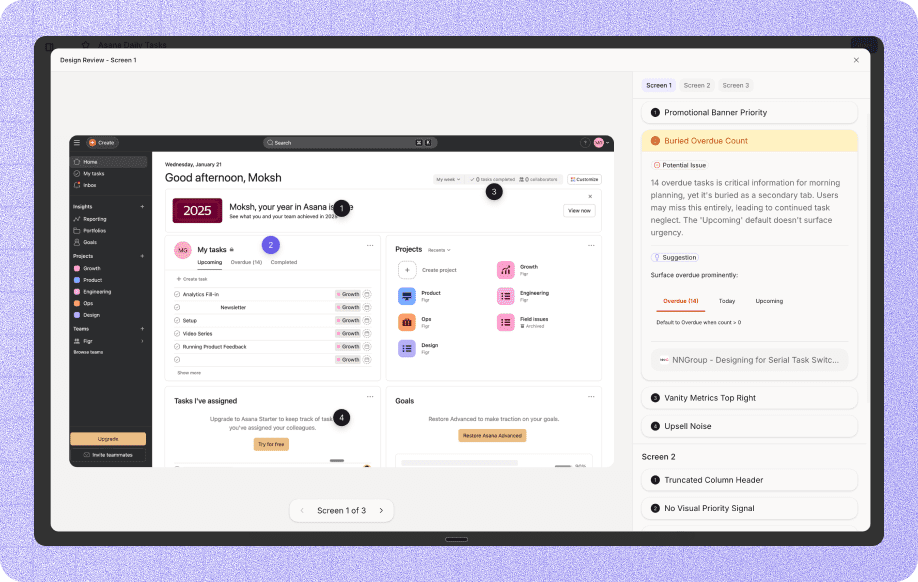
- Figma export overhaul. Resolved 11 issues affecting export fidelity.
Fixed text distortion, centering, and bold element spacing. Auto-layout now transfers correctly. Gradients, border radius, and SVG colors export as defined. Images, icons, and input components (range sliders, etc.) render properly. Resolved overflow clipping issues.
Version 2.9.5 - Jan 12, 2026
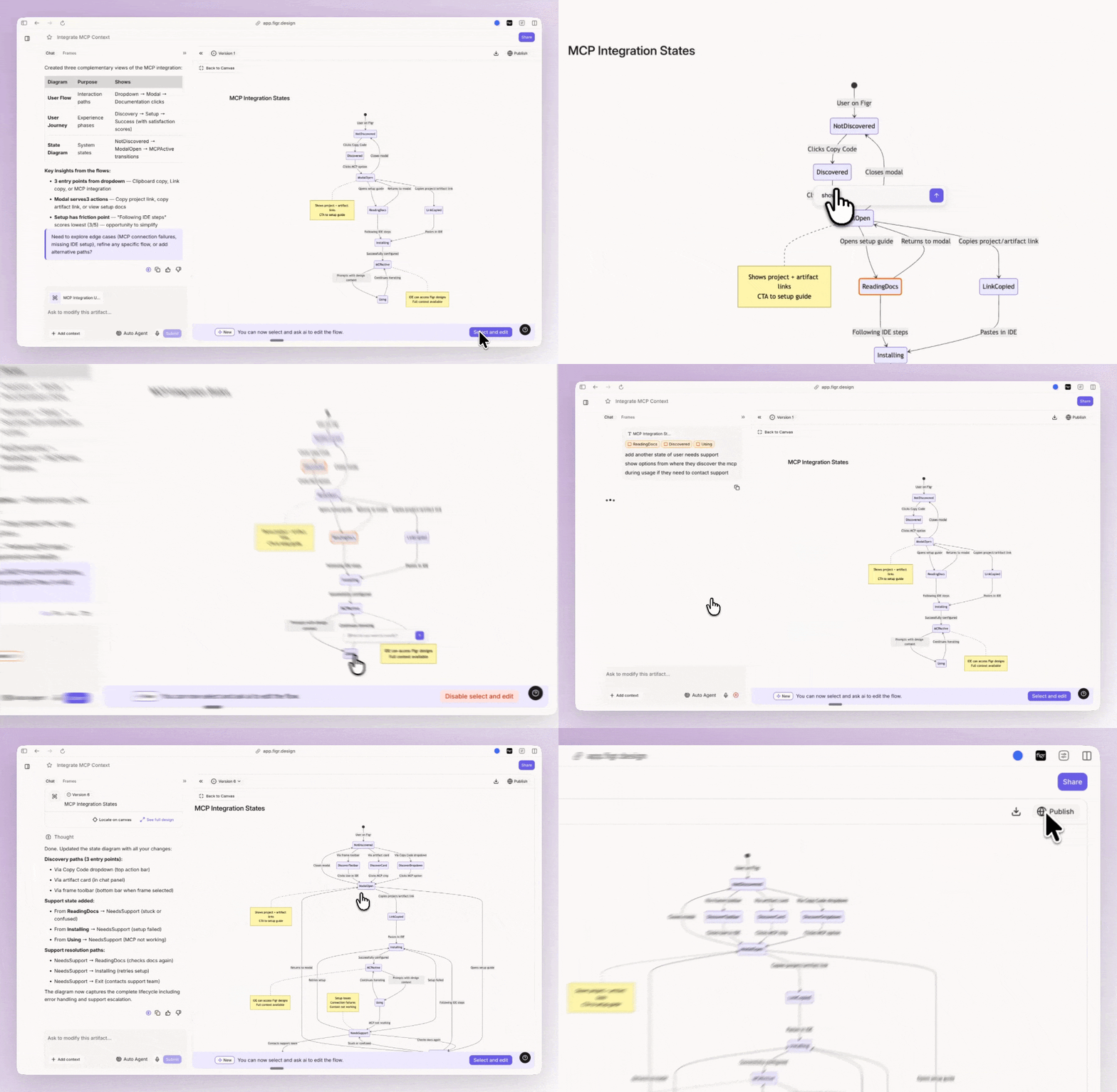
Features- Editable user flows with export. Flows are now fully editable directly in canvas. Modify nodes, connections, and labels inline. Export to PNG or SVG for documentation and stakeholder sharing.
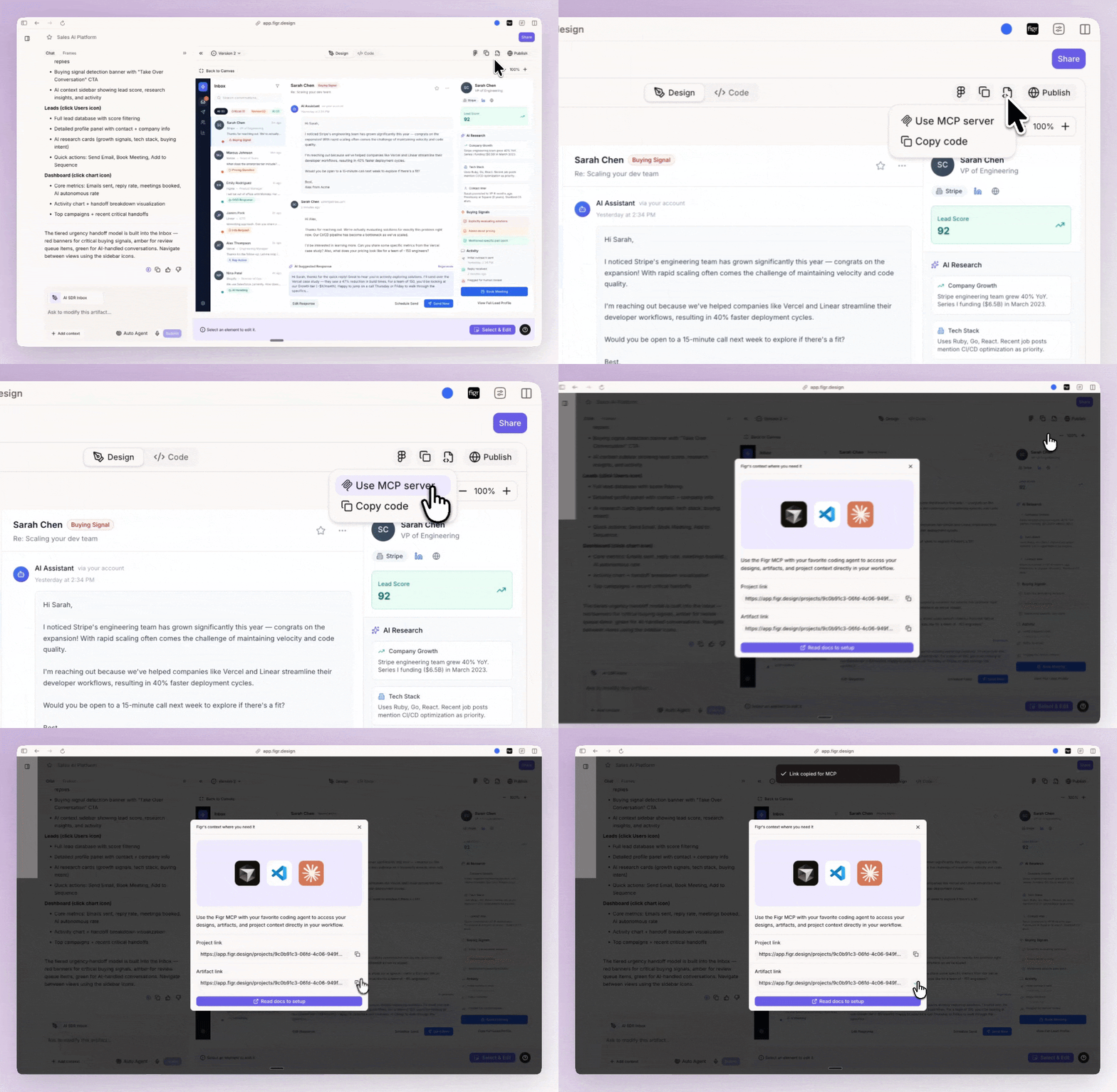
- Figr MCP Server. Connect your entire project context to your IDE. Decisions trail, generated code, user flows, and design artifacts transfer to Cursor, VS Code, or any MCP-compatible environment. Setup takes minutes.
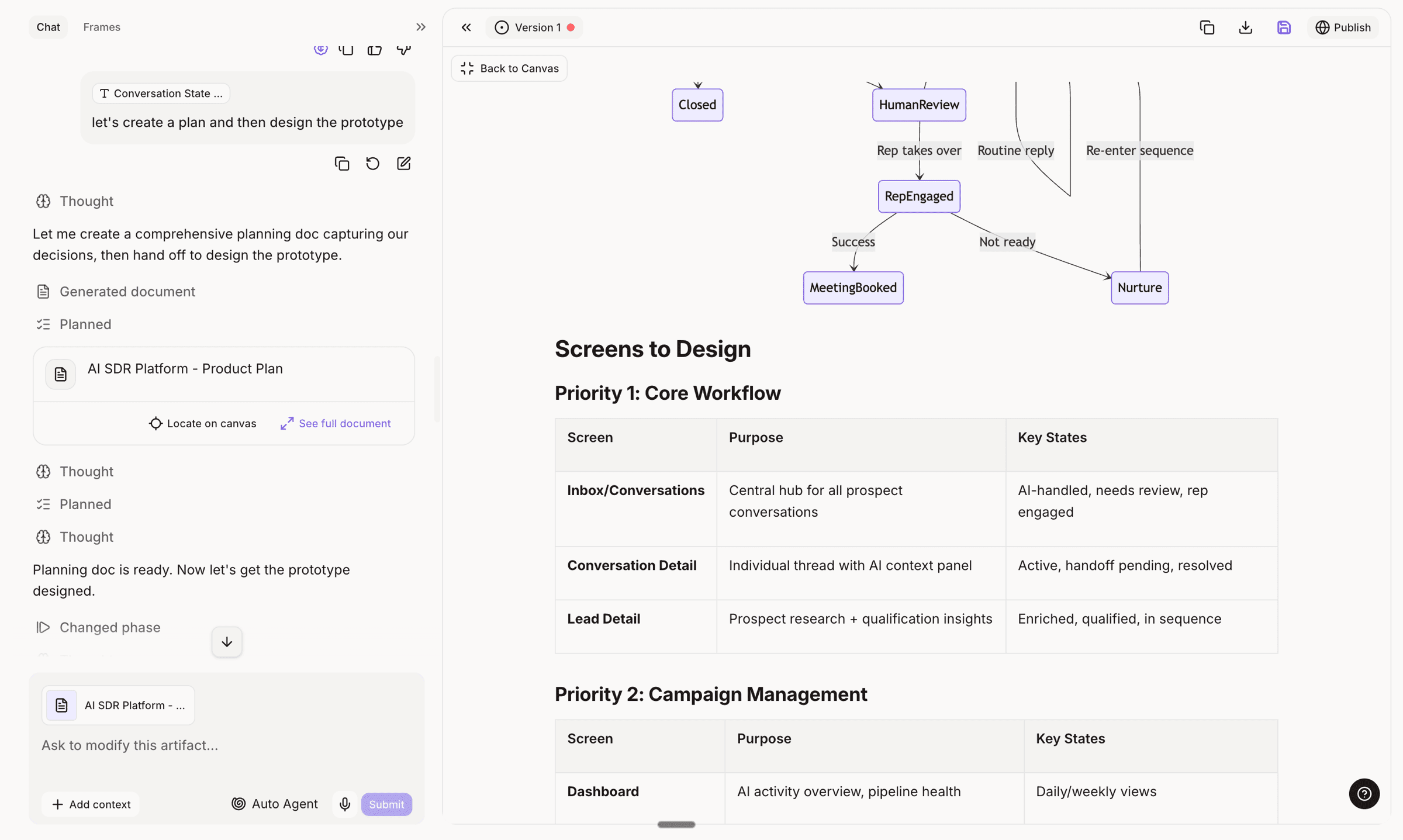
- Planning-first design execution. For multi-screen projects, Figr now generates a planning document before heavy design work. Includes: screens to build, decisions made, what execution decides, and constraints. No more missing screens in complex prototypes.
- Visual thinking in chat. Dynamic artifacts, flows, and diagrams render directly in conversation. Sharper zone-level wireframes during planning. Clear separation between thinking (structure) and execution (visual design).
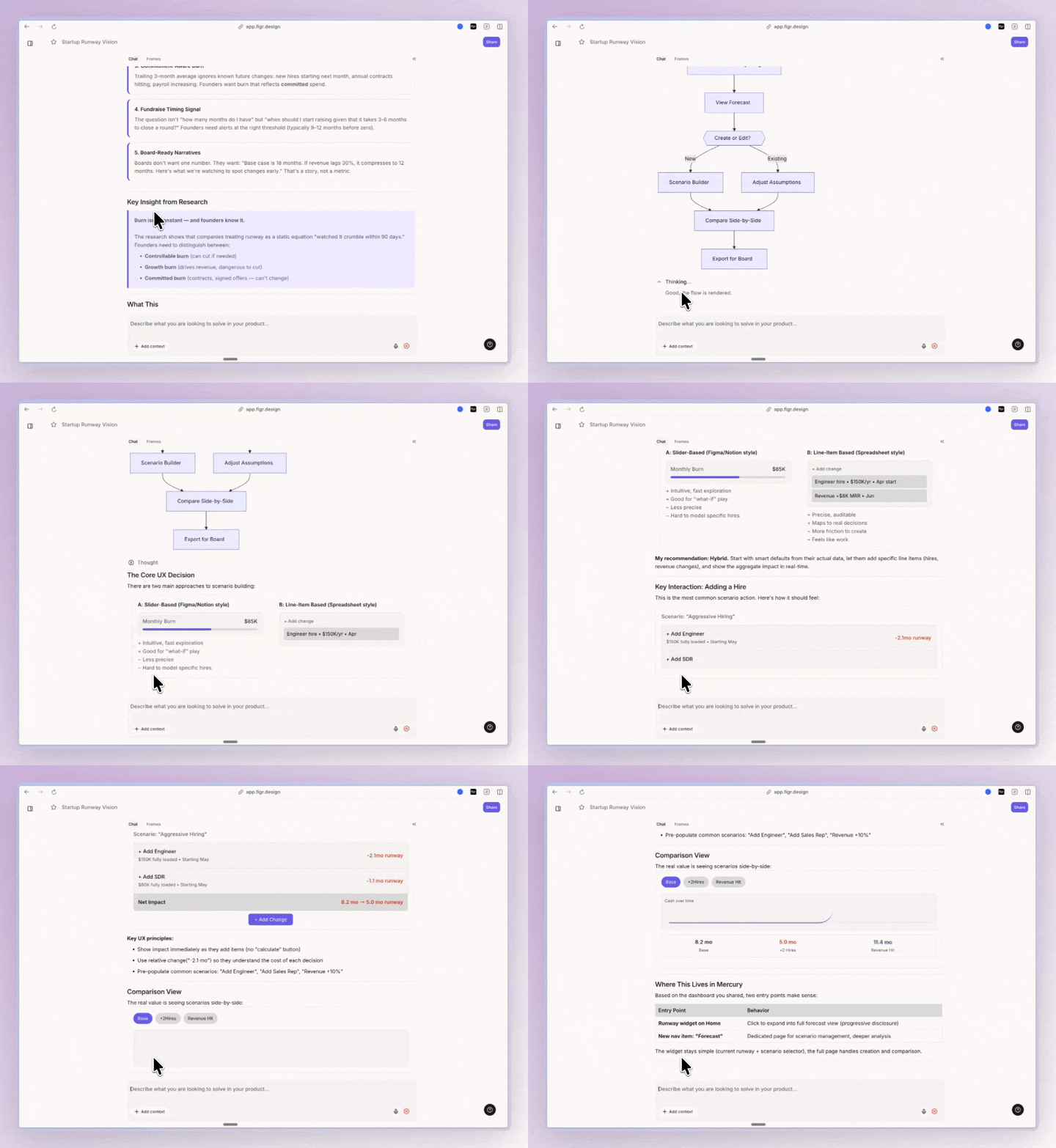
- Auto agent mode switching. Figr detects when to transition between brainstorm and design phases automatically. No manual prompting to “continue to design” required.
- Full-screen flow rendering. Flows now open in full-screen view when generated in chat. Better visibility for complex user journeys.
- Screen-based task tracking. Todos now reference actual screens (“Dashboard”, “Settings modal”) instead of UI facets (“header”, “sidebar”). Clearer scope for what gets built.
- Cleaner planning phase. Reduced visual noise during early exploration. Wireframes show zone-level structure only. Detailed design decisions happen in execution, not planning.
Version 2.9.3 - Jan 5, 2026
Features- Document artifact type. Generate editable documents in Markdown format for PRDs, specs, and planning docs. Edit inline, download as PDF, or export to your preferred text editor.
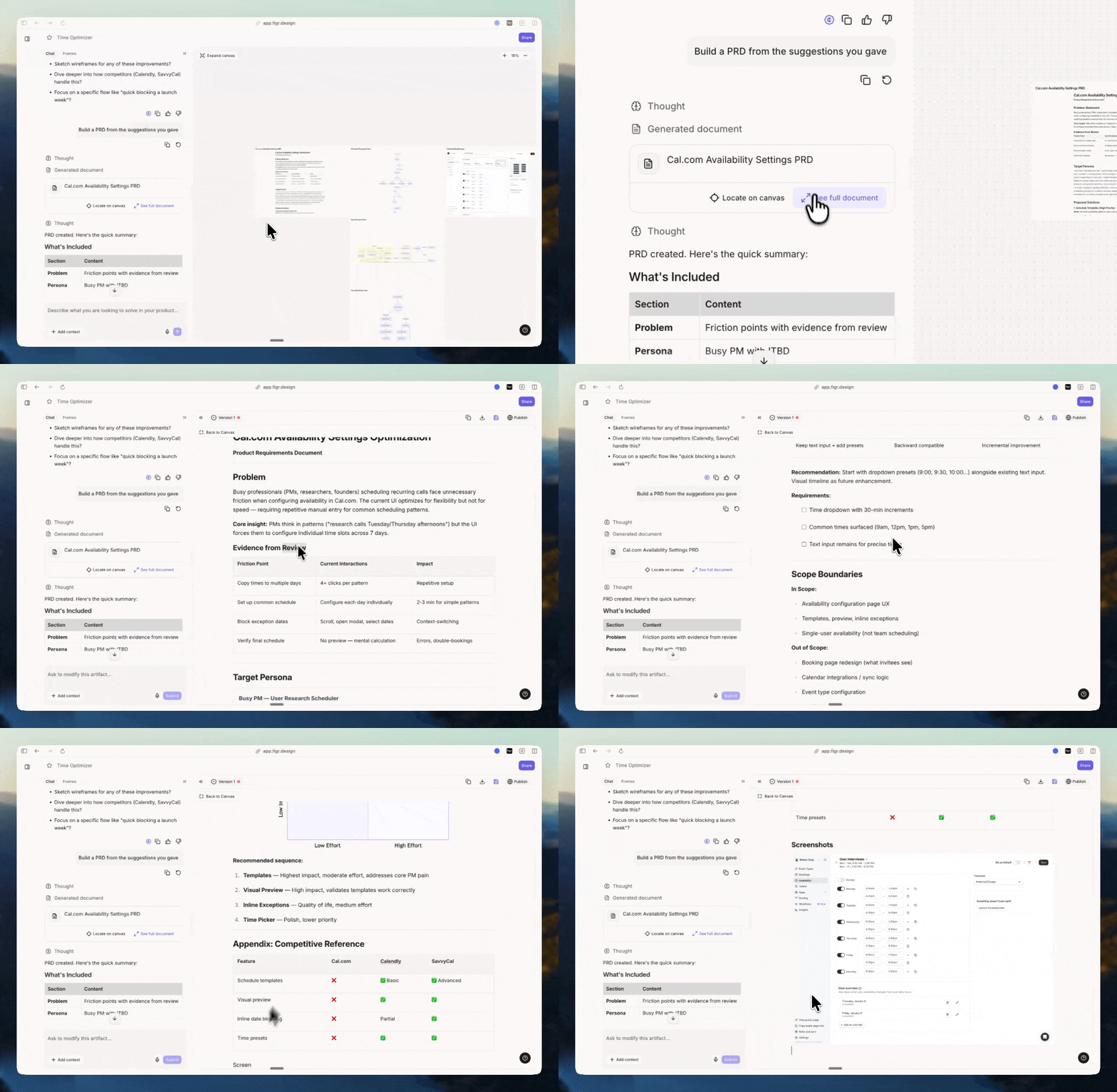
- Pixel-perfect Figma asset import. Deeper Figma integration now extracts all assets including images and SVGs with precise fidelity. Import complete design systems without quality loss.
- Resolved workflow diagram rendering issues in main chat sidebar.
- Fixed product context failing to load in specific project configurations.
December 2025
Version 2.9.2 - Dec 30, 2025
Features- Visual brainstorming in chat. HTML artifacts, flows, and diagrams now render directly in conversation. Thinking processes display as interactive visuals instead of text blocks for clearer explanation and more engaging exploration.
- Enhanced Figma asset extraction. Figr now captures vectors and assets from Figma frames, not just layout structure. Your actual design elements transfer into Figr’s working context.
- Better placeholder image selection. Designs now use higher quality, more contextually appropriate images. Proper rendering replaces broken placeholders.
- Expanded video format support. Improved understanding of screen recordings and video inputs across more file formats. Figr extracts more context from visual walkthroughs.
- Faster brainstorming through parallel processing. Inspiration search, web research, and memory retrieval now run simultaneously. Reduced wait time for complex queries.
- Design system fetching. Design systems load automatically when available, ensuring consistency from the start of each project.
- Pricing model opening issues fixed when credits were exhausted.
- Performance optimization in projects with extensive artifacts and context history.
- Various stability and interaction bugs resolved.
Version 2.9.1 - Dec 16, 2025
Figr AI is Now Public
- Anyone can now try Figr AI. No waitlist. No whitelist required.
- Thank you for being an early user. Your feedback shaped this release.
- Separate thinking and execution agents. Figr now reasons through problems before building. Dedicated agents for UX thinking and design execution mean better edge case detection, stronger flow logic, and reasoning you can follow.
- Web search and asset extraction. Research competitors, pull design patterns, and extract assets from URLs directly. Figr finds what you need and integrates it into your work.
- Gallery of real projects. See what’s possible with Figr through actual solved problems, not demos. Includes builds on existing products, research & PRDs, user flows, edge cases, UX reviews, and test cases.
- File system sandbox. Work with files and assets in an isolated environment for safer experimentation and iteration.
- Pricing update. Individual plans now start at **$19/month. **Team plans start at $24/member.
- Automatic mode switching. Figr selects the appropriate mode (Chat, Design, Review) based on your request. Less manual toggling.
- Enhanced versioning system. Design versions (v1, v2, v3) now managed cleanly. Regenerating replaces old versions instead of creating duplicates.
- Higher quality diagrams and flows. Improved output for flowcharts, user journeys, and technical diagrams.
- Reliable regeneration. “Try again” functionality now works consistently across all design types.
- Improved performance. Faster performance in projects with extensive artifacts and context history.
- Corrected zoom level behavior in flow diagrams.
- Resolved accessibility issues in flow navigation and controls.
What this means: Figr now thinks like a PM and designs like a designer. Research → Think → Design → Test. All in one place.
Version 2.9.0 - Dec 9, 2025
Major Release
- Chrome Extension for web parsing. Capture HTML structure from any live website in one click. Figr reads actual layout, spacing, and component hierarchy—not just visual screenshots. Use captured structures as input for design generation or UX audits and accessibility reviews.
- Multi-model orchestration. Figr now automatically routes between Opus 4.5, Gemini 3, and custom models based on task requirements. Multiple model calls run in parallel for higher quality results without manual switching.
Improvements
- Progressive loading indicators. Real-time progress feedback during design generation shows which steps are executing.
- Faster query processing. Eliminated processing bottlenecks for quicker response times across all tools.
- Resolved full-screen display issues affecting design view.
- Fixed query editing functionality that prevented modifications to in-progress requests.
November 2025
Version 2.8.6 - Nov 27, 2025
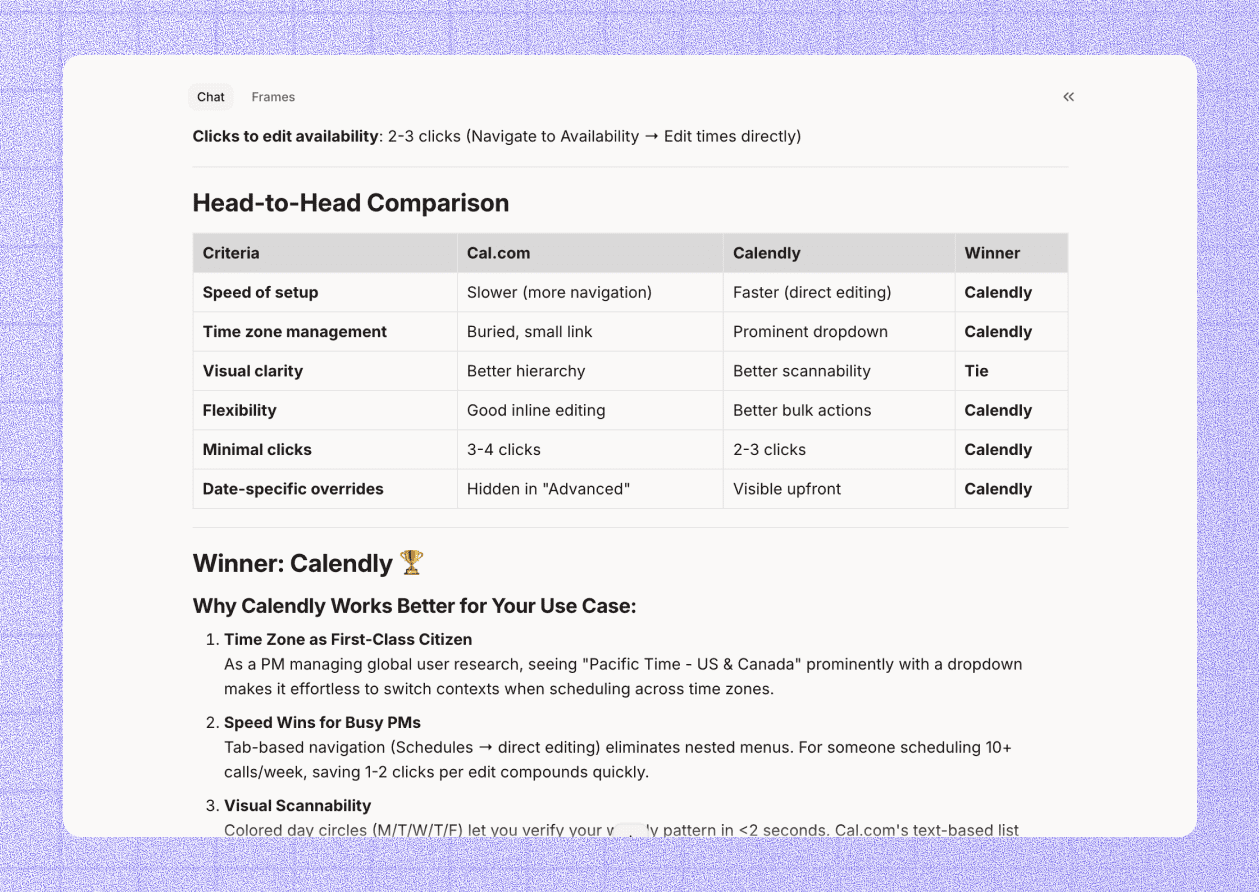
- A/B testing comparison tool. Upload two designs to compare side by side. Figr analyzes based on UX principles, interaction patterns, and data from 200,000+ app screens. Get specific breakdowns of what works and why, grounded in real patterns rather than generic suggestions.
- Custom image uploads for brand assets. Upload your own imagery and brand assets. Figr automatically integrates them into generated designs to match your visual style.
- Enhanced UX review depth. Design reviews now reference specific patterns from the 200k+ screen database. Feedback includes actionable insights tied to proven UX principles.
- Mobile-optimized published links. Prototypes shared via web links now render properly on mobile devices. Test and share designs across any screen size.
- Refined full-screen zoom controls. Smoother zoom behavior with better aspect ratio preservation in full-screen design view.
- Faster tool response times. Reduced latency when switching between editing modes and invoking design tools.
- Overall stability improvements and faster page load times across the platform.
Version 2.8.4 - Nov 17, 2025
Major Release
- Publish prototypes to web. Generate shareable links for any prototype. Recipients can view and interact with designs without a Figr account. Test flows with stakeholders or present work externally.
- Memory management controls. Edit or delete stored memories directly from the sidebar. Toggle whether Figr uses memories for each query. Control what product context, preferences, and decisions are retained.
- Enhanced design reviews. Upload multiple screens or complete flows for comprehensive evaluation. Figr analyzes full context and provides targeted feedback based on what you’re showing.
- Real images in designs. Paste any asset URL or search Unsplash directly. Figr integrates actual images into high-fidelity prototypes instead of placeholders.
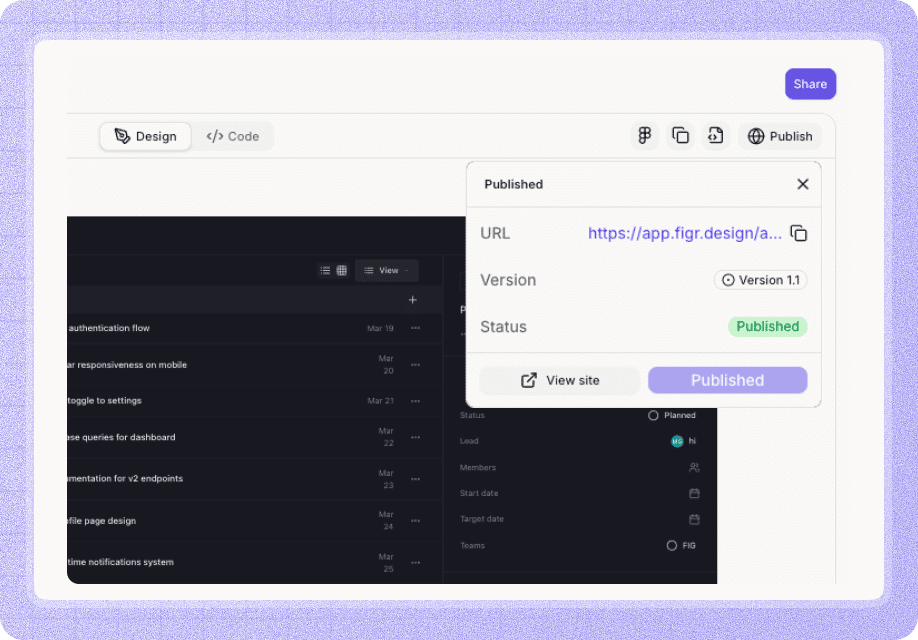
- Parallel Figma processing. Auto-fetch design systems and process multiple Figma links simultaneously for faster context gathering.
- Improved Figma layout understanding. Better extraction of component structure, spacing, and design system patterns from Figma files.
- Streaming stability. Fixed response doubling and eliminated reload requirements during generation.
- Resolved missing Figma fetch operations during queries.
- Fixed design system not loading at project start.
- Reduced unnecessary “thinking” steps for more direct responses.
Version 2.8.0 - Nov 10, 2025
Major Release
- Advanced quick prototyping. Connect screens together to build interactive prototypes. Navigate between designs to simulate complete user flows.
- Planning tool for structured problem-solving. Break down complex design problems into actionable steps. Figr thinks through the approach before execution.
- Expanded video format support. Upload .mp4, .mov, .mkv, and .webm files for design context and reference.
- Dark mode accessibility updates. Revised color palette to meet accessibility standards in dark mode.
- Enhanced error messaging. Error boundary now displays specific error details instead of generic update messages.
- Removed select-and-edit option for users with read-only access.
- Fixed corner trimming artifacts in full-screen design view.
- Removed redundant “view full design” button from full-screen Mermaid diagrams.
- Improved URL redirect handling and added proper 404 error page.
Version 2.7.2 - Nov 03, 2025
Features- Self-service design intelligence setup. Configure design system guidelines and product context generation directly from your workspace. No need to wait for manual configuration.
- Enhanced design workflow interactions. Visual nudge when designs appear, tooltips on hover for context, and relocated select-and-edit button for easier access.
- Attachment support in select-and-edit mode. Add reference images and files while editing designs.
- Narrower chat sidebar minimum width. More canvas space for design work without compromising chat readability.
- Resolved state reversion issue when using stop-and-edit functionality.
- Fixed mobile overlay display inconsistencies.
October 2024
Version 2.7.0 - Oct 23, 2025
FeaturesMajor Release
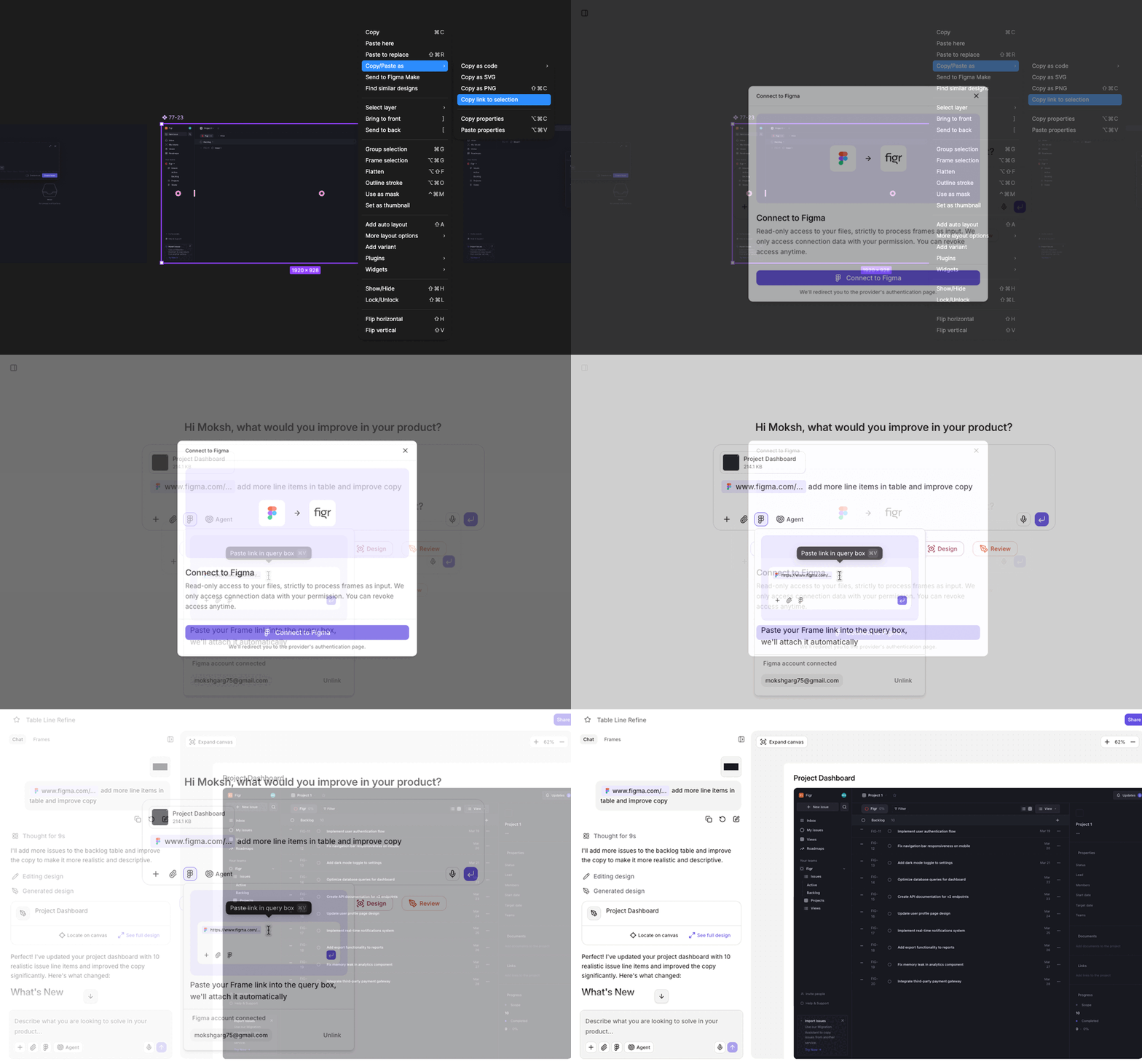
Figma input integration. Paste Figma URLs directly as attachments. Figr extracts layout metadata automatically for pixel-perfect design work.
- Full-screen aspect ratio controls. Designs now maintain proper aspect ratios in full-screen view with zoom slider for precise adjustments.
- Full-screen chat scrolling. Chat interface now scrolls across the entire screen for better readability.
- Enhanced human assistance input. Added dedicated textarea for extra context when requesting human help. Accordion now expands by default.
- Loading states for design generation. Visual feedback now appears when design tools are processing your request.
- Send button enabled for pasted content. Large text pastes now immediately activate the send button.
- Payment confirmation modal. Clear success message after payment completion.
- Improved UI consistency across filter controls, tooltips, and toast notifications.
- Added empty state messaging for organization teams page.
- Fixed image distortion while copying from artifact view.
- Removed “select and edit” option from workflow full-screen mode.
Version 2.6.0 - Oct 15, 2025
Features- New interaction modes. Switch between Chat, Design, Auto, and Review modes to match your workflow. Choose how Figr responds based on your current task.
- Review Mode for design evaluation. Analyzes your designs against UX laws, usability principles, and patterns from popular apps. Provides grounded feedback on images and user flows with specific references to best practices.
- Persistent sidebar state. Your sidebar preferences now save across sessions.
- Retry button for failed actions. Quickly retry operations without starting over.
- Recent projects now correctly display “Shared” status for collaborators (previously showed empty).
- Organization settings navigation no longer redirects to new chat unexpectedly.
- Resolved update screen appearing intermittently after logout.
Version 2.5.0 - Oct 5, 2025
Major Release
A refreshed UI and better project management.
- A refreshed first time experience. Get started with new queries quickly.
- More user friendly credits system. Dynamic credits deduction and no limits on number of messages.
- Simpler project management and access via sidebar
- Mark any project as your favourites.
- Upgraded to latest models leading to better and faster design generations.
- Decreased verbosity in text ouputs. Sounds more natural.
- Minor bugs resolved with Mobile designs
September 2024
Version 2.3.0 - Sep 26, 2025
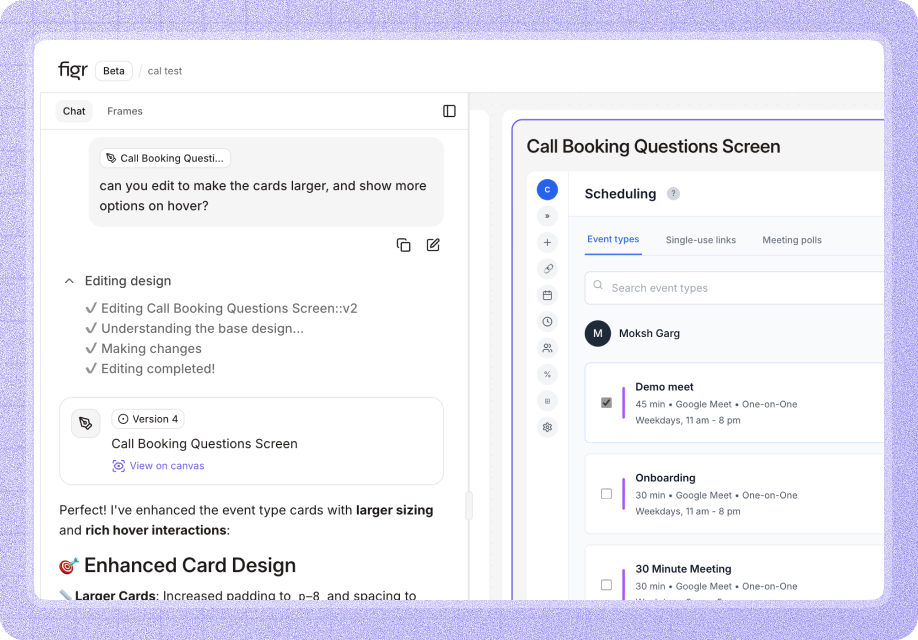
Features- Version control for your designs. Rewind to any previous version. Go back when you realize v3 was actually the winner. Your design history is always maintained.
- Precise editing. ‘Select and Edit’ an the elementor or refer to the complete design to make changes. Now onlt that selected element changes leads to 10x faster iterations.
- Upload and asset management. Better context handling for long conversations.
- Upload more type of assets, and chat history maintains even the longest PDFs.
- Minor issues with ‘Retry query’ fixed.
Version 2.2.0 - Sep 12, 2025
Features- Copy PRDs and text with included with formatting. Figr turns them into actual structured PRDs. Now copy from Figr and paste the text anywhere Google Docs, MS Docs, Notion… and keep the formatting intact.
- Deep web search built in. Figr grounds its suggestions in current, real industry insights. Not generic patterns. Actual working UX from products shipping right now.
- Layout fidelity improved. Upload a reference screen or sketch. Figr follows it very closely now. A new image processing model understands each element in your uploaded design.
- Uploads don’t fail anymore.
- Fixed issues of some queries stopping mid-way.
August 2025
Version 2.1.0 - Aug 28, 2025
Features- Inspiration module launched. Figr now references to 200k+ best designed screens and refers to best UX laws to help you design the best version fo your product.
- Adding context is stupid simple now. Redesigned the whole flow. Drop your stuff, Figr figures it out. Less clicking, more building.
- Model fallbacks in place. If one model’s having a moment, Figr switches to another. You won’t even notice. Your work just keeps moving.
Version 2.0.1 - Aug 20, 2025
Major Release
Figr is fully agentic now. This is the big one. Figr doesn’t just generate - it thinks, plans, and builds. It has a deeper understanding and retention of your context.
- It generates complete flows. Processes URLs without you asking. Understands your product context way deeper. And yes, it’s faster too.
Version 1.7.4 - Aug 8, 2025
Features- Point and edit anything. Click exactly what needs fixing. Refine that button, that headline, that spacing. No more describing what you want - just point.
- Figr gets your brand voice now. Better understanding of your visual identity and voice. Outputs feel more you from the first generation.
July 2025
Version 1.7.0 - Jul 16, 2025
Enterprise Security
Figr is now SOC 2 Type II compliance certified.
- Full-screen design interaction. Hit full screen and actually see your work. No distractions.
- Access control got granular. Set permissions exactly how your org needs them. Project-level, user-level, and team-level.
Version 1.6.2 - Jul 7, 2025
Features- Export to Figma is live. Copy your designs straight into Figma. One click. Done.
- Design retrieval shipped. Need that screen from three weeks ago? Figr finds it instantly. No more endless scrolling through canvases.
- Canvas got better. Toolbar repositioned where your hands actually expect it. Interactions feel tighter, more responsive.
- Homepage redesign. Cleaner. Faster to what you need. Less chrome, more canvas.
June 2025
Version 1.5.0 - Jun 26, 2025
Features- Global Memory launched. Tell Figr about your product once. Refer to your uploaded context in any canvas.
- New brainstorm mode is live. Better ideation. Better states. More control before you jump to design.
- Chat module shipped. Q&A got smarter. It actually understands what you’re asking.
- Better context for every state. The last conversation pair flows into the next generation. Tighter, more relevant outputs.
- Selection and targeted changes work. Click what needs fixing. Change just that. No more regenerating everything.
- Leaner context window. Removed duplicate messages. Smaller context = sharper results = faster generations.
- Hit escape to deselect. Finally works like you’d expect.
- Scroll issue fixed. That weird canvas jumping thing? Squashed.
Version 1.4.0 - Jun 10, 2025
Features- Code export is here. Select any artifact and hit that copy icon. Your designs, now in actual code you can ship.
- Smarter thinking, visible thinking. The AI shows its work now. You’ll see how it gets from your brief to the final design.
- Design artifacts just show design. No more clutter. Just the thing you asked for.
- Your design system sticks properly. Generated designs follow your tokens and components way more consistently.
- Designs remember each other. Build multiple screens? The second one learns UX patterns from the first. Your flows stay coherent.
- Faster generation. Latency’s down. You’ll notice.
- Images copy correctly now. That annoying bug? Gone.